
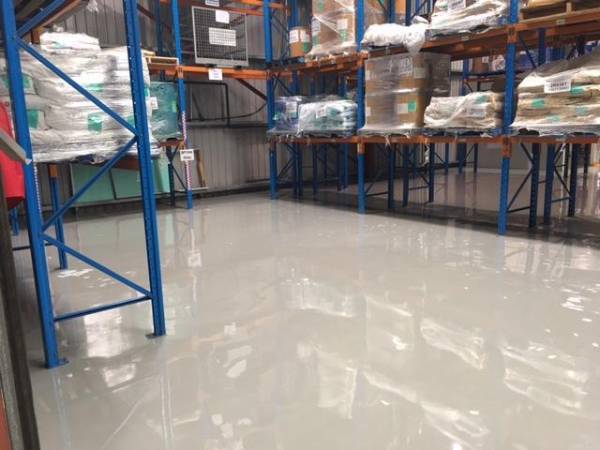
Concrete surfaces are a valuable asset for commercial properties, but they don’t last forever. Daily vehicle traffic, changing weather conditions, heavy equipment, and constant foot traffic gradually wear down driveways, warehouse floors, loading zones, pathways, and public spaces. As cracks appear, surfaces become uneven, and finishes fade, many property owners face the same question: Should we choose concrete resurfacing or replace the concrete entirely?
For most Melbourne commercial properties, the answer isn’t as straightforward as choosing the cheapest option. The right decision depends on the condition of the existing slab, operational requirements, safety considerations, and long-term maintenance goals. Replacing concrete can be necessary in some situations, but many structurally sound surfaces can be restored through professional resurfacing, delivering a renewed appearance and improved performance without the disruption of a complete rebuild.
At Spray Pave Melbourne, we help facility managers, commercial property owners, councils, schools, builders, and industrial operators assess their existing concrete and recommend the most practical solution. In this guide, we’ll compare concrete resurfacing vs concrete replacement, explain when each option is appropriate, and help you determine which approach offers the best long-term value for your property.
Concrete Resurfacing vs Concrete Replacement: A Quick Comparison
If your existing concrete is structurally sound but has cosmetic damage, minor cracks, surface wear, or fading, concrete resurfacing is often the most practical solution. It restores the appearance and functionality of the surface while avoiding the cost and disruption associated with demolition.
Concrete replacement, on the other hand, involves removing the existing slab and constructing a completely new one. This approach is generally reserved for concrete that has experienced significant structural failure, major movement, severe settlement, or extensive deterioration that cannot be repaired effectively.
| Factor | Concrete Resurfacing | Concrete Replacement |
|---|---|---|
| Existing slab | Retained | Removed |
| Project duration | Shorter | Longer |
| Operational disruption | Minimal | Significant |
| Cost | Lower | Higher |
| Appearance | Completely refreshed | Brand-new surface |
| Suitable for structural failure | No | Yes |
| Long-term maintenance | Reduced | Reduced |
For many commercial sites across Melbourne, resurfacing provides the ideal balance between performance, appearance, and cost efficiency.
Not Sure Which Solution Is Right?
Every commercial property is different. Our team can inspect your existing concrete and recommend whether resurfacing or full replacement will provide the best long-term outcome.
What Is Concrete Resurfacing?
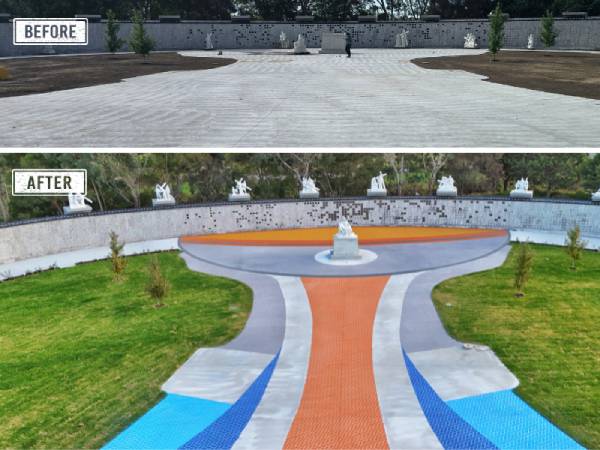
Concrete resurfacing is the process of restoring and improving an existing concrete surface without removing the original slab. Instead of starting from scratch, specialists repair minor defects, prepare the surface, and apply high-performance resurfacing systems that improve durability, appearance, and safety.
When the underlying concrete remains structurally stable, resurfacing offers a practical way to extend its service life while significantly reducing project costs and downtime.
Depending on the project’s requirements, resurfacing may include decorative coatings, protective sealers, textured anti-slip finishes, crack repairs, joint repairs, and colour enhancements. These systems can transform tired concrete into a durable surface that complements the surrounding environment while standing up to daily commercial use.
Commercial resurfacing is commonly used for:
- Warehouse floors
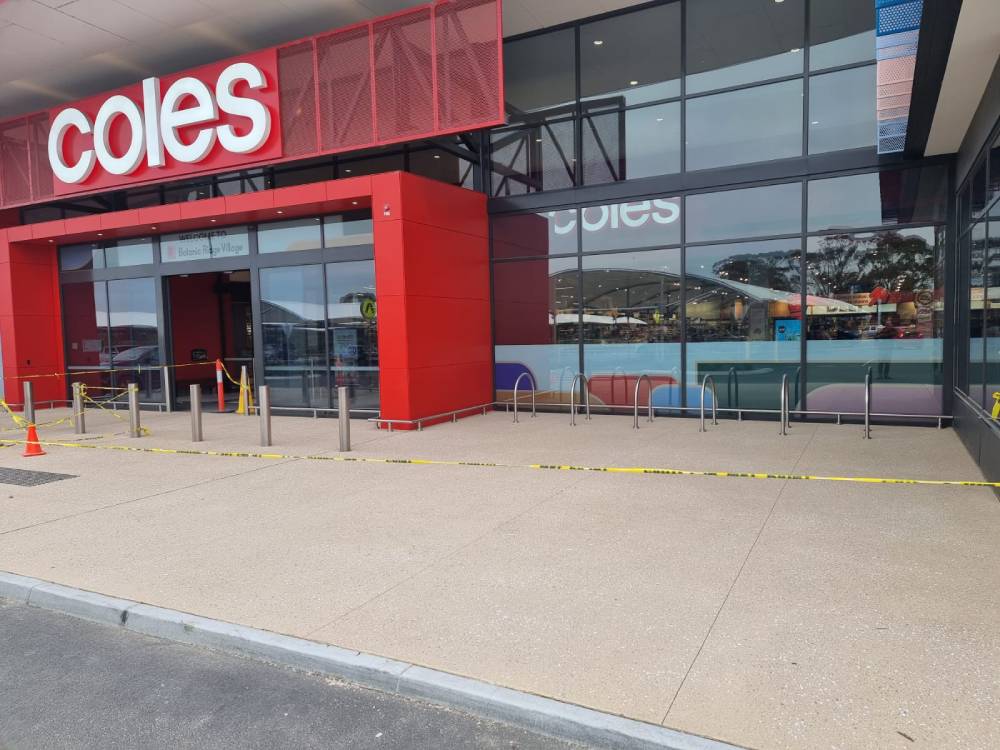
- Commercial entrances
- Retail centres
- Public pathways
- Car parks
- Schools
- Council facilities
- Outdoor entertainment areas
Because the original slab remains in place, resurfacing produces less waste than complete replacement and allows businesses and public facilities to return to normal operations much sooner.
What Is Concrete Replacement?
Concrete replacement involves removing the existing slab before constructing an entirely new concrete surface. Although it provides a completely new foundation, it is a more complex process that requires considerably more planning, labour, and project management.
A typical replacement project includes demolition, removal of existing materials, excavation where required, base preparation, reinforcement, formwork installation, pouring new concrete, finishing, and curing before the surface can safely be used again.
For commercial properties, these additional stages often translate into longer project timelines and increased disruption. Areas such as warehouse loading zones, customer car parks, school access paths, and council infrastructure may remain unavailable for extended periods while work is completed.
Despite these challenges, replacement remains the best solution when the existing concrete has reached the end of its structural life or can no longer be repaired safely.
When Is Concrete Resurfacing the Better Choice?
For many Melbourne commercial properties, resurfacing offers substantial advantages because it focuses on preserving existing assets rather than replacing them unnecessarily.
If inspections confirm that the slab is structurally sound, resurfacing can restore both appearance and functionality while avoiding the expense of demolition.
Commercial property owners often choose resurfacing when they want to improve presentation, increase safety, reduce maintenance requirements, or extend the life of existing infrastructure without interrupting normal business operations.
This makes resurfacing particularly suitable for warehouses, office complexes, retail centres, educational facilities, council infrastructure, hospitality venues, medical centres, and public spaces where minimising downtime is a priority.
Rather than treating resurfacing as a temporary cosmetic upgrade, many organisations now view it as part of a long-term asset preservation strategy that helps maximise the return on existing infrastructure investments.
Real-World Example
For example, a warehouse with surface wear, faded coatings, and minor cracking can often be restored through resurfacing without interrupting operations for an extended period. By contrast, a loading dock with significant slab movement caused by foundation issues may require complete replacement to ensure long-term structural performance.
Similarly, schools and councils frequently choose resurfacing for pathways, playgrounds, and public spaces where the concrete remains structurally sound but requires improved appearance, slip resistance, and durability.
Lower Project Costs Without Compromising Performance
One of the biggest reasons commercial organisations choose resurfacing is its ability to deliver outstanding results while keeping project costs under control.
Because the existing slab remains in place, businesses avoid many of the expenses associated with complete reconstruction. There is no need for large-scale demolition, extensive excavation, or significant waste removal, making resurfacing a far more efficient option for suitable surfaces.
This cost efficiency is especially valuable for organisations responsible for maintaining multiple assets, including schools, shopping centres, warehouses, local councils, and commercial property portfolios. Instead of allocating large budgets to replace otherwise serviceable concrete, they can invest in restoring surfaces while directing maintenance funds toward other operational priorities.
More importantly, resurfacing delivers long-term value by protecting the existing concrete from further deterioration, helping reduce future repair requirements and extending the lifespan of the asset.
Extend the Life of Your Concrete
If your commercial concrete is showing signs of wear but remains structurally sound, professional resurfacing could save your business significant time and money while improving safety and appearance.
When Is Concrete Replacement Necessary?
Although concrete resurfacing is the preferred solution for many commercial properties, it isn’t suitable for every situation. If the underlying concrete has experienced significant structural failure, resurfacing may only mask the problem rather than solve it.
Complete replacement is generally recommended when the slab can no longer provide a stable foundation or when deterioration has progressed beyond practical repair.
Replacement may be the best option if your concrete has:
- Extensive structural cracking that extends through the slab
- Significant sinking or movement caused by foundation issues
- Severe reinforcement corrosion affecting structural integrity
- Large areas of spalling or concrete failure
- Ongoing drainage problems that continue to damage the slab
A professional inspection is essential before deciding on replacement. In many cases, surfaces that appear badly worn can still be successfully restored through resurfacing, while others require complete reconstruction to ensure long-term performance and safety.
Rather than assuming replacement is necessary, having an experienced contractor assess the condition of your concrete can help you avoid unnecessary costs.
Downtime Comparison: Keeping Your Business Operating
For commercial facilities, the true cost of a project isn’t measured solely by construction expenses. Lost productivity, restricted access, customer inconvenience, and operational interruptions can have an even greater financial impact.
Concrete replacement typically involves several stages, including demolition, removal of old materials, excavation, pouring new concrete, and curing. During this time, sections of the property may remain inaccessible, affecting day-to-day operations.
By comparison, commercial concrete resurfacing is completed far more efficiently because the existing slab remains in place. Once repairs and surface preparation are complete, the new coating or overlay can be installed without the lengthy reconstruction process associated with replacement.
This makes resurfacing particularly valuable for:
- Warehouses that rely on continuous loading and unloading activities
- Retail centres that want to minimise customer disruption
- Schools scheduling maintenance during holiday periods
- Councils maintaining public pathways and community facilities
- Commercial offices that require safe pedestrian access
Reducing downtime not only helps businesses maintain operations but also limits the indirect costs often associated with major construction projects.
Safety and Compliance Benefits
Safety is one of the most important considerations when managing commercial, industrial, and public spaces. Damaged concrete doesn’t just affect appearance it can create hazards that increase maintenance costs and expose property owners to unnecessary risk.
Over time, commercial concrete can develop uneven surfaces, worn finishes, slippery areas, and deteriorating joints that compromise safe access for employees, customers, students, and visitors.
Professional resurfacing helps address these issues by restoring the surface and incorporating modern protective systems where required. Depending on the environment, resurfacing can include textured finishes, anti-slip coatings, joint repairs, and durable protective sealers that improve both safety and long-term performance.
These improvements are particularly valuable for:
- Commercial entrances
- Warehouse walkways
- Loading areas
- Public footpaths
- Educational facilities
- Car parks
- Council infrastructure
By addressing surface deterioration before it becomes a major problem, organisations can improve accessibility, reduce maintenance requirements, and create safer environments for everyone using the facility.
Concrete Crack Repair & Joint Sealing
Long-Term Maintenance and Return on Investment
When comparing concrete resurfacing vs concrete replacement, it’s important to consider more than the initial project cost. Long-term maintenance requirements often have a greater impact on the overall value of the investment.
Resurfacing protects existing concrete against ongoing wear, weather exposure, stains, moisture penetration, and daily traffic. By preserving the original slab, businesses can delay major reconstruction while maintaining a professional appearance.
For organisations responsible for managing multiple sites or extensive infrastructure, this approach supports a proactive maintenance strategy rather than reacting to expensive failures after they occur.
Commercial resurfacing can help:
- Extend the lifespan of existing concrete
- Reduce future repair requirements
- Improve the presentation of commercial
properties - Protect surfaces from ongoing deterioration
- Lower lifecycle maintenance costs
For many Melbourne businesses, councils, and educational facilities, resurfacing represents a practical investment that balances performance, appearance, and budget efficiency.
Choosing the Right Concrete Resurfacing System
Every commercial environment places different demands on its concrete surfaces. The most suitable resurfacing system depends on factors such as traffic levels, exposure to chemicals, safety requirements, and the desired finish.
For example, warehouse floors may benefit from heavy-duty coatings designed to withstand forklifts and machinery, while commercial entrances often require decorative finishes with enhanced slip resistance. Public pathways, schools, and council facilities typically prioritise durability and pedestrian safety, whereas retail centres may also focus on creating an attractive first impression.
Choosing the right system ensures your resurfaced concrete performs reliably while reducing future maintenance requirements.
Sustainability Benefits of Concrete Resurfacing
Sustainability is becoming an increasingly important consideration for commercial property owners and asset managers.
Choosing resurfacing instead of complete replacement can reduce environmental impact by preserving the existing concrete structure rather than sending large volumes of demolished material to landfill.
Because resurfacing requires fewer raw materials and less heavy demolition equipment, it also reduces the overall resources required to complete the project.
For organisations with sustainability objectives or long-term asset management plans, resurfacing offers an environmentally responsible solution without compromising durability or performance.
How Professionals Decide Between Resurfacing and Replacement
Every commercial property is different, which is why experienced contractors assess several factors before recommending the most appropriate solution.
Rather than making decisions based solely on surface appearance, professionals evaluate the overall condition of the concrete, including structural stability, drainage performance, traffic loads, existing damage, and the intended use of the area.
This assessment helps determine whether the concrete can be successfully restored or whether replacement is necessary to ensure long-term reliability.
At Spray Pave Melbourne, we believe every recommendation should be based on the condition of the asset rather than a one-size-fits-all approach. If resurfacing can safely restore the surface and extend its lifespan, we’ll recommend it. If replacement is the better long-term solution, we’ll explain why and help you plan the project accordingly.
Why Melbourne Commercial Properties Choose Spray Pave Melbourne
Commercial resurfacing projects require more than quality materials they require experience, careful planning, and an understanding of how different environments perform over time.
With more than 15 years of industry experience, Spray Pave Melbourne delivers tailored resurfacing and protective coating solutions for commercial properties throughout Melbourne. Our team works with facility managers, builders, schools, councils, industrial operators, and commercial property owners to restore surfaces that are safer, more durable, and designed for long-term performance.
Whether you’re upgrading a warehouse floor, restoring a commercial entrance, improving public pathways, or protecting high-traffic infrastructure, we provide practical recommendations based on your property’s specific requirements.
Our goal isn’t simply to improve the appearance of concrete it’s to help clients maximise the lifespan and value of their existing assets while minimising disruption to daily operations.
Frequently Asked Questions
In most situations, yes. Concrete resurfacing is generally more cost-effective because it uses the existing slab rather than requiring demolition, excavation, and complete reconstruction. However, if the concrete has severe structural damage, replacement may provide better long-term value.
The best way to determine suitability is through a professional site inspection. If the slab is structurally sound and the damage is limited to surface wear, minor cracking, or cosmetic deterioration, resurfacing is often a practical solution.
Yes. Warehouses commonly use commercial concrete resurfacing to restore worn floors, improve durability, enhance safety, and minimise operational downtime without replacing the entire concrete slab.
Yes. Depending on the application, resurfacing systems can incorporate textured finishes and anti-slip coatings that improve traction in pedestrian areas, commercial entrances, loading zones, and public spaces.
The lifespan depends on traffic levels, environmental conditions, and ongoing maintenance. When professionally installed and properly maintained, resurfaced commercial concrete can provide many years of reliable performance.
Replacement is generally recommended when the slab has extensive structural cracking, significant movement, severe foundation issues, reinforcement deterioration, or widespread concrete failure that cannot be effectively repaired.
Absolutely. Schools and councils frequently choose resurfacing because it restores existing infrastructure, improves safety, reduces maintenance costs, and minimises disruption to students, staff, and the public.
Every concrete surface deteriorates differently. A professional assessment identifies the underlying condition of the slab and ensures you invest in the most appropriate solution rather than paying for unnecessary replacement or temporary repairs.
Request a Commercial Concrete Assessment
Not sure whether your concrete should be resurfaced or replaced?
Our experienced team will inspect your existing surface, identify any underlying issues, and recommend the most practical solution based on your property’s condition, operational requirements, and long-term maintenance goals.
Whether you manage a warehouse, commercial facility, council asset, school, retail centre, or industrial site, we’re here to help you maximise the value of your investment.
Conclusion
Choosing between concrete resurfacing and concrete replacement ultimately depends on the condition of your existing concrete and your long-term operational goals.
For many Melbourne commercial properties, resurfacing provides the ideal balance of cost efficiency, durability, and minimal disruption. When the underlying slab remains structurally sound, resurfacing can restore appearance, improve safety, extend service life, and reduce long-term maintenance costs without the expense of complete reconstruction.
Replacement remains the right solution for concrete that has experienced severe structural failure or foundation issues, but it isn’t always the only option. A professional assessment can determine the most practical approach and help you make an informed investment in your property.
If you’re managing a warehouse, retail centre, commercial facility, school, council asset, or industrial site, Spray Pave Melbourne can assess your existing concrete and recommend the solution that delivers the greatest long-term value.

Related Posts
Need Expert Advice for Your Next Project?
Speak with the Spray Pave Melbourne team today to discuss your project requirements, timelines, and surface solutions.